
Waterbury Court Docket Basics
A docket is the court's running case log. In Waterbury City court dockets, the docket can show the case number, parties, court location, case type, scheduled events, motions, orders, disposition entries, and hearing dates. In a criminal matter, the docket may show arraignment, continuances, plea dates, disposition, sentence, or a daily calendar event. In a civil or family matter, it may show appearances, motions, short-calendar items, orders, judgments, and notices.
The docket is narrower than the full case file. A docket entry can tell a user that a motion was filed or a hearing occurred, but it may not provide the motion text, exhibits, transcript, or certified order. The docket is still the best starting point because it identifies the Waterbury court location and docket number needed for clerk requests.
Waterbury dockets also help separate court events from other local records. A police report may explain an incident, a Department of Correction record may show custody status, and a city parking record may show a local ticket. The Superior Court docket answers a different question: what has the court scheduled, received, ordered, or decided in the case.
Find Waterbury Dockets Online
Connecticut splits Waterbury City court dockets by court function. The Superior Court civil inquiry portal covers civil, family, housing, small claims, foreclosure, court events, short calendar, legal notices, and pending foreclosure sales. The criminal and motor vehicle case menu covers pending cases, convictions, daily dockets, attorney or firm lookup, and arrest warrants. Probate dockets use Connecticut Probate Court resources, while federal cases use PACER and CM/ECF.
- Open the Judicial Branch case look-up menu and choose the court-record system that matches the case type.
- For civil, family, housing, or small claims activity, use party name, docket number, court events, or short-calendar tools.
- For criminal and motor vehicle calendars, use daily docket search by court or by defendant.
- Use Waterbury location filters such as Waterbury JD, Waterbury GA 4, Waterbury Housing Session, or Waterbury Community Court when available.
- Save the docket number and court location before contacting the clerk for documents or certified copies.
The daily criminal and motor vehicle docket source is captured in the manifest from the Judicial Branch daily docket search by court.
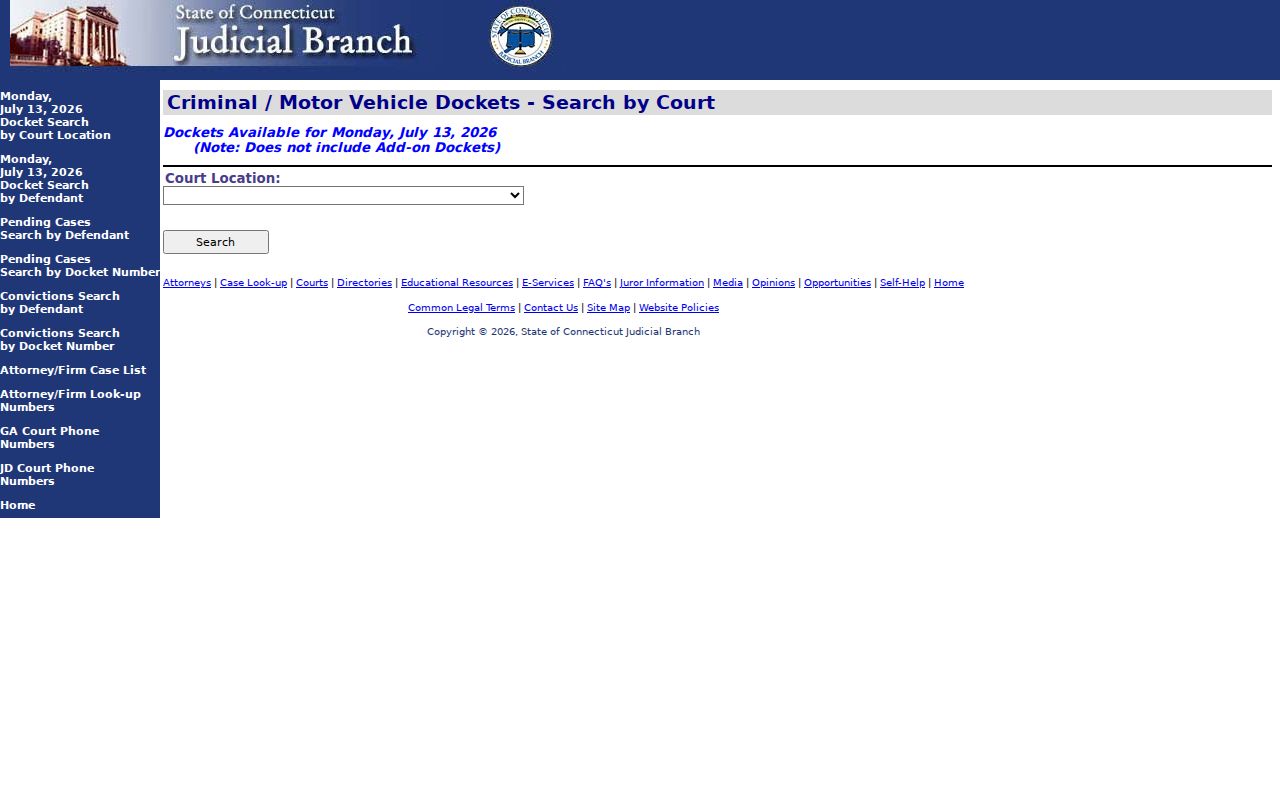
This Waterbury docket channel is the practical source for checking criminal or motor vehicle court calendars tied to a court location.
Waterbury Docket Entry Fields
The research did not capture a live Waterbury sample case entry, but the Judicial Branch portal inventory identifies the docket fields and case-record elements that matter. Docket entries should be read as court activity markers. They point to what happened or what is scheduled. They do not prove that every document is public or downloadable.
| Field | What It Shows |
|---|---|
| Docket number | The location code, year, and case number used to track the Waterbury case. |
| Court or location | Waterbury JD, Waterbury GA 4, Waterbury Housing Session, Waterbury Community Court, or another location. |
| Parties | Plaintiff, defendant, petitioner, respondent, applicant, state, or accused person. |
| Case type | The matter category, such as housing, divorce, foreclosure, small claims, criminal, or motor vehicle. |
| Event or entry | An appearance, motion, order, hearing, short-calendar item, legal notice, continuance, or disposition event. |
| Disposition | The result of a case or charge when the public docket makes that outcome available. |
| Limitations | Sealed, erased, juvenile, youthful offender, protected address, and redacted information may not appear. |
Waterbury Courts With Dockets
Waterbury's court structure matters because there is no local county court docket run by a county clerk. Connecticut Superior Court is the statewide trial court. Waterbury has Judicial District operations for civil, family, and criminal matters, plus Geographical Area #4 for criminal and motor vehicle matters. Housing, community court references, probate, and municipal parking matters have separate routes.
| Court or office | Docket source | Typical use |
|---|---|---|
| Waterbury Judicial District civil/family | Civil inquiry, court events, short calendar | Civil suits, divorce, custody, foreclosure, small claims, and related calendars. |
| Waterbury J.D. criminal / GA #4 | Criminal pending case and daily docket tools | Arraignments, criminal cases, motor vehicle cases requiring court, and continuances. |
| Waterbury Housing Session | Civil inquiry location filters | Summary process, housing disputes, rent, damages, and security deposit matters. |
| Connecticut Probate Courts | Probate case lookup and eFiling where authorized | Estate, trust, guardianship, conservatorship, and children's probate matters. |
| Federal District of Connecticut | CM/ECF and PACER | Federal civil, criminal, and bankruptcy-related docket access. |
Federal docket access for Waterbury-related federal cases can start with the District of Connecticut CM/ECF system.
CM/ECF is separate from state Waterbury Superior Court dockets, so a federal case will not appear in the state civil inquiry portal.
Docket vs Full Case Record
A Waterbury City court docket is an index of court activity. The full case record may include pleadings, motions, orders, exhibits, affidavits, financial documents, sentencing papers, and transcripts. Some full-file material is public, some is redacted, and some is sealed by statute or court order. That distinction matters when a user needs proof for court, housing, employment, licensing, appeal, or personal records.
| Point | Docket | Full Case Record |
|---|---|---|
| Format | Chronological entries and calendar data. | Documents, filings, orders, exhibits, and certified copies. |
| Best use | Track events, court dates, location, status, and docket number. | Review the substance of motions, judgments, pleadings, or sentencing papers. |
| Access | Often searchable online for public matters. | May require clerk contact, copy fees, ID, or court permission. |
| Limits | May hide sealed, erased, juvenile, or protected fields. | May contain restricted documents not available to the public. |
Note: A docket entry confirms case activity, but the clerk controls certified copies and restricted-file access.
Read Waterbury Court Dockets
Read Waterbury City court dockets in sequence. First confirm the court location, then the docket number, then the case type and party names. After that, review each entry for dates, event type, courtroom or calendar references, orders, continuances, and disposition terms. A continuance means the matter moved to another date. A disposition is the outcome of a charge or case. A short calendar is a civil or family motion calendar.
Criminal and motor vehicle dockets need extra care. The Judicial Branch states that conviction information is generally shown for no more than 10 years after sentencing unless a shorter Practice Book rule applies. Youthful offender cases, juvenile cases, and infraction or violation convictions are not shown on the public conviction page. Criminal history can also change because of erasures, corrections, pardons, and modifications.
For civil and family dockets, short-calendar entries and court-event listings should be checked against the case detail page. A motion can appear on a calendar before it is ruled on, and a continued hearing can move to a later date. For criminal dockets, compare the daily docket with the pending case search when timing matters.
Federal case records for Waterbury users may be found through PACER when the matter is in federal court.
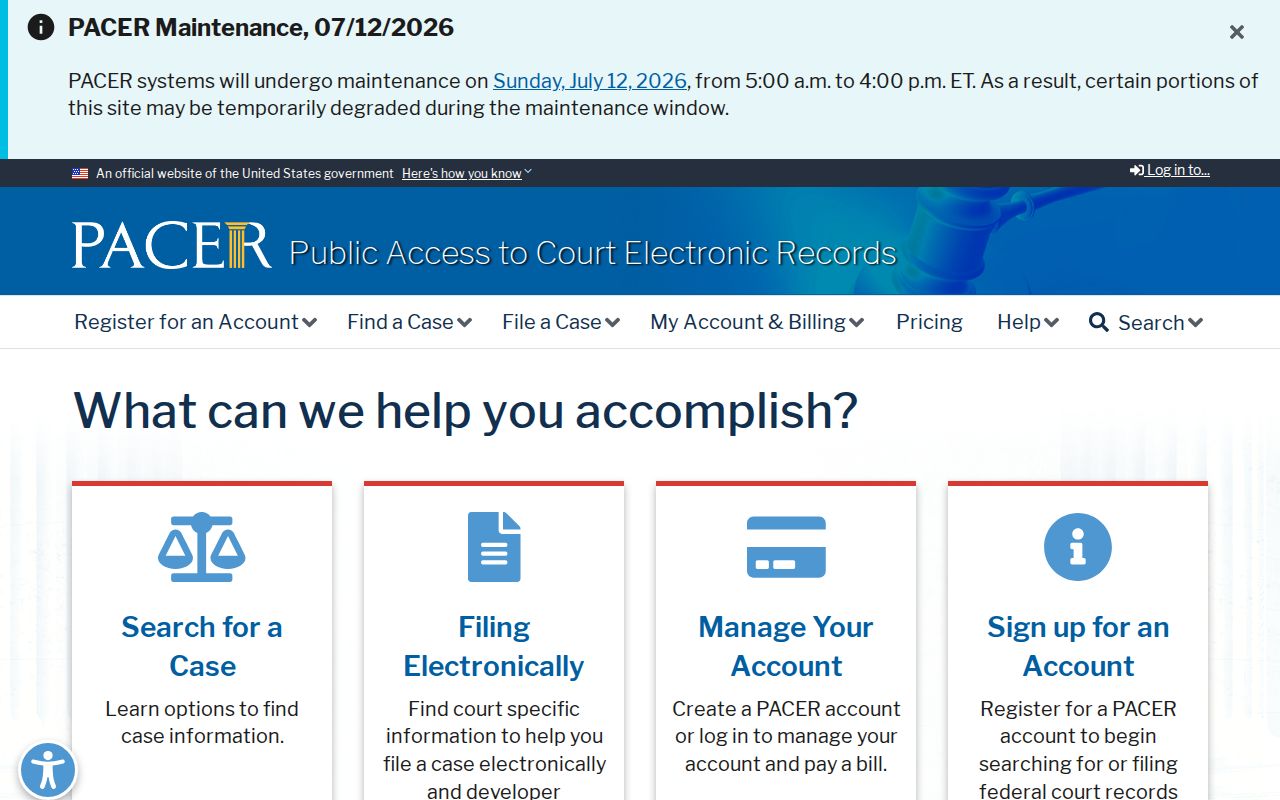
PACER is useful for federal dockets and documents, but it does not replace Connecticut Judicial Branch tools for state Superior Court dockets.
Appeal Dockets After Waterbury
Appeals from Connecticut Superior Court generally move to the Connecticut Appellate Court and, in selected matters, the Connecticut Supreme Court. Federal appeals from the District of Connecticut go to the Second Circuit. An appeal docket is not the same as the trial court docket. It tracks briefs, appendices, motions, orders, oral argument, and the appellate decision. The trial court docket remains important because it shows the orders and judgment being reviewed.
The manifest image for this section comes from the U.S. Court of Appeals for the Second Circuit, which handles federal appeals from Connecticut.
Second Circuit materials matter only for federal appeals, while Connecticut state appeals use Connecticut appellate courts and Judicial Branch resources.